

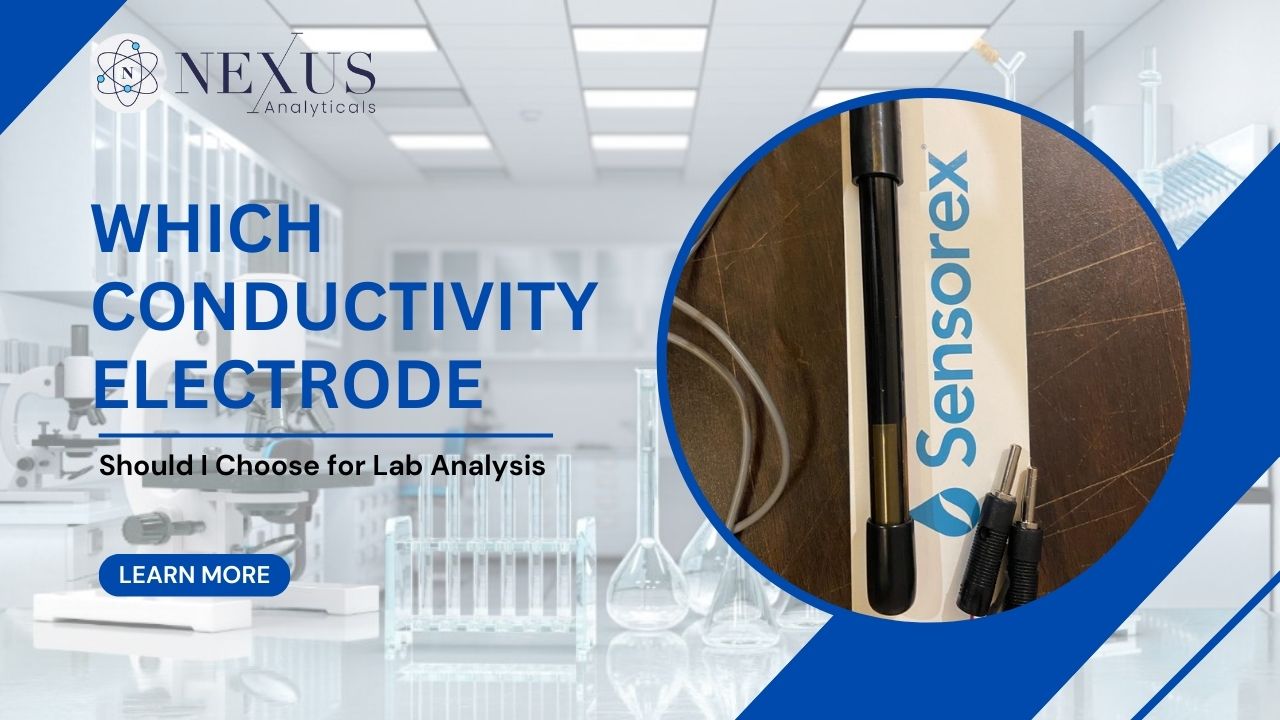
The right equipment for collecting accurate measurements can make or break the results of your lab work. It’s crucial to know which electrode is used in a conductivity meter in order to acquire accurate and dependable information about the ionic content of solutions. It’s crucial to choose the correct conductivity electrode for environmental testing and pharmaceutical analysis so that you get accurate readings.
Nexus Analyticals knows how hard it can be to choose the correct lab gear. We provide labs in a variety of fields with a full spectrum of high-quality analytical lab instruments and expert guidance to help them make smart decisions that improve their testing and guarantee that they obtain consistent, accurate findings.
Did you know?
Graphite conductivity electrodes last longer than metal electrodes in harsh chemicals because they resist corrosion and surface reactions.
Getting to Know the Basics of Conductivity Measurement
Before we talk about how to choose electrodes, let’s make sure we know what conductivity measurement is. The concentration of dissolved ions is directly related to how well a solution can conduct electricity, which is what conductivity measures.
Why Choosing the Right Electrode Is Important
- Range of Measurements: Different electrodes can handle different ranges of conductivity, from ultrapure water to concentrated solutions.
- Compatibility with Samples: Electrode materials must not corrode when they come into contact with your samples.
- Requirements for accuracy: Electrodes with better stability are needed for high-precision applications.
Laboratory Conductivity Electrode Types
1. Conductivity Sensors That You Can Touch
For laboratory use, contacting-type conductivity sensors are the most popular choice. These electrodes assess conductivity by touching the sample solution directly.
Important Features:
- Direct measurement using metal electrodes submerged in solution
- Works with samples that have a conductivity between 0.1 μS/cm and 2,000 mS/cm.
- To keep the electrodes from getting dirty, they need to be cleaned and maintained regularly.
2. Graphite Contacting Conductivity Sensors
Chemicals don’t hurt the graphite contacting conductivity sensor, and it lasts a long time. It’s very helpful in rooms that are hard to work in because of this.
Good things:
- Stronger against harsh poisons and very high and low pH levels
- Does the job longer than standard metal electrodes
- Because the surface doesn’t respond, it needs less maintenance.
3. Electrodes for Conductivity in Industrial Graphite
Industrial graphite conductivity electrodes are made for continuous process monitoring, but many labs use them for high-volume testing or when samples have particles in them.
Pros:
- Strong structure can handle tough sample conditions.
- Self-cleaning designs cut down on the time needed for maintenance.
- Works with systems that automatically take sample.
4. Specialized designs for laboratory conductivity sensors
There are special laboratory conductivity sensors that can do things that are great for study and analysis on a desk.
What Makes Them Different:
- Small sample sizes need compact probe designs.
- Compensation for temperature changes to get accurate readings in different situations
- Quick-connect fittings make it easy to change the electrodes.
Considering Maintenance and Calibration
Regular calibration with high-quality standards makes sure that measurements are correct. Take these maintenance things into account:
- How often you need to clean your sample kinds
- Availability of spare parts and PM KIT parts
- Calibration processes that are easy to follow
- Works with your existing pH electrode calibration
A Step-by-Step Guide to Making the Right Choice
The best choice is standard touching electrodes made of platinum or stainless steel because they work well and don’t cost much.
- Chemical analysis that is very harsh can be done with either graphite contacting conductivity sensor technology or ceramic cells that don’t respond with chemicals.
- You can achieve the required level of accuracy using low-conductivity cells that are equipped with polished platinum electrodes.
- Need to test a lot of things quickly? You might want to use industrial graphite conductivity electrodes that were made just for labs.
Avoid Common Mistakes
- Not checking for sample compatibility: Always check for chemical resistance before buying.
- Not taking the effects of temperature into account: Check that the temperature adaptability features work well.
- Skipping upkeep: Regularly maintain even the best conductivity measurement electrode.
- Choosing Based on Price By yourself: Think about how much it will cost to own, which includes maintenance and calibration.
Tips on How to Pick the Best Electrode for Conductivity Meter Use
It’s not easy to figure out which electrode is used for a conductivity meter. To help you move on, think about these real-life examples:
- Environmental Testing: electrodes that can be used to measure a multitude of things in nature
- Checking the purity of drugs: setups with two electrodes that meet USP standards
- Research labs: Different types of lab conductivity sensors can record and keep data quite accurately.
The Next Step: Getting the Most Out of Your Money
You need to do more than simply look at the details when choosing the correct contacting-type conductivity sensor. You also need to choose the one that works best in your lab. Things to think about:
- Consider what sizes you will need both now and in the future.
- Buy leads from well-known companies if you want good ones.
- Take some time each week to check to be sure everything is running smoothly and make changes.
- Teach your workers how to properly store and handle cords.
- Write down how you measure things so you don’t forget.
We at Nexus Analyticals want to be your trusted partner in laboratory excellence. Our team of experts has decades of experience helping labs choose, set up, and keep the best conductivity measurement solutions.
Read More Blogs :-
- Capillary vs Packed Column: A Complete Guide for Gas Chromatography Users
- Which Features Make the Bruker ALPHA FTIR Spectrometer Ideal for Material Analysis?
- How Does Raman Spectroscopy Help in Pharmaceutical and Biological Studies?
Frequently Asked Questions
Q1: How often do I need to calibrate my conductivity electrode?
Check the calibration before big testing and once a month for regular work.
Q2: Can you use the same electrode for conductivities that are different?
Some electrodes can measure a number of different things, but electrodes that are made for specific ranges are more accurate.
Q3: How long do conductivity electrodes last?
Quality electrodes can endure from 1 to 3 years with the correct care. Graphite electrodes, on the other hand, last longer in tough conditions.
Q4: How do you clean an electrode that is clogged?
Soak in a moderate acid, detergent, or enzyme cleaning, rinse, and then set the settings again before using.
Q5: Do different samples need different electrodes?
Use specific electrodes for polluted samples to avoid cross-contamination and keep accuracy