

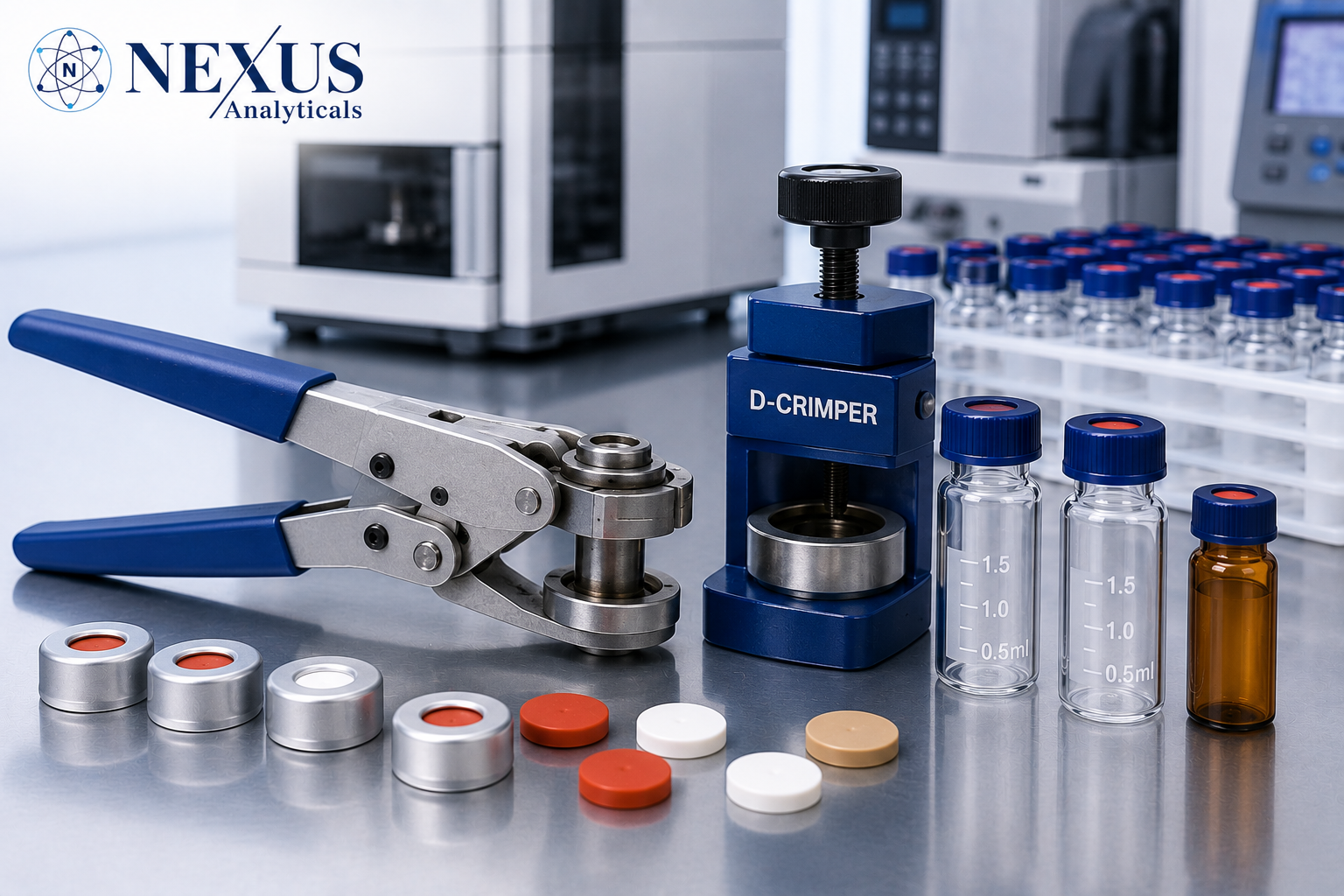
A crimper and D-crimper seal chromatography vials tightly, stopping sample leaks and evaporation during GC and HPLC runs. The right crimping tool protects your data accuracy every single time. Here’s what you actually need to know before buying one.
Did you know? According to the National Institute of Standards and Technology (NIST), sample integrity depends heavily on proper container closure during analysis.
That’s exactly where Crimper & D-Crimper tools come in. Nexus Analyticals rely on precise crimping every day to keep samples safe. These small tools solve a huge problem. Weak seals lead to evaporation, contamination, and wasted reagents. A good crimper stops all of that in seconds.
Key Takeaways
- A Crimper & D-Crimper protects sample integrity in GC and HPLC testing every day
- D-shaped jaws apply even pressure, creating tighter, more reliable, leak-proof vial seals every time
- Match crimper size to cap diameter, including standard 22mm options for GC vials
- Hand crimping tools suit most mid-volume labs needing speed and consistent daily grip control
- Proper sealing technique prevents evaporation, contamination, and wasted chromatography test samples in every lab
What Makes Crimper & D-Crimper Tools So Important
Chromatography work depends on clean, sealed samples. Any gap in the cap lets air or moisture sneak in. This ruins volatile compounds fast, especially in headspace testing. A reliable crimping tool for headspace vials locks the seal shut instantly. It also protects your GC column from contamination. Precision matters more than people realize here. One loose cap can throw off an entire batch of results.
Vial sealing isn’t just routine lab work. It’s a quality control step that many analysts overlook. Skipping it, or doing it poorly, costs time and money later.
Manual vs Hand Crimping Tool for Vials: What’s the Difference
Labs often debate manual vs hand crimping tool for vials, and the answer depends on volume. Manual crimpers work well for small batches. They’re cheap, simple, and need no power source. Hand crimping tools, though, offer better grip control and speed for daily use.
- Manual crimpers: Budget-friendly, slower, good for occasional testing
- Hand crimping tools: Ergonomic, faster, ideal for high-throughput labs
- Pneumatic crimpers: Fastest option, best for large-scale operations
Most small to mid-size labs start with hand tools. They balance cost and speed well.
How a D-Crimper Works for GC and HPLC Vials
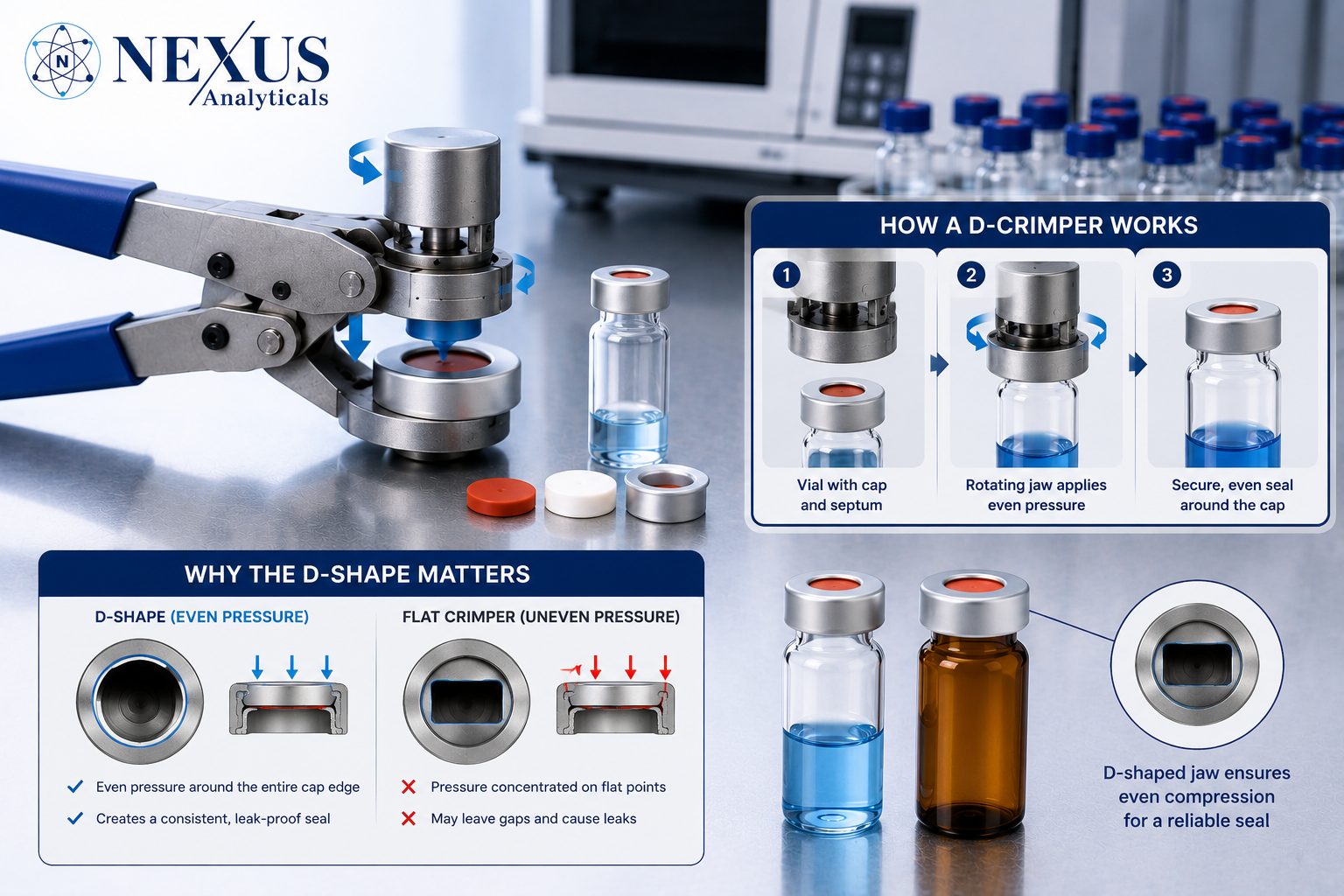 A D-crimper for GC and HPLC vials uses a rotating jaw design. This creates an even, consistent seal around the cap. Unlike flat crimpers, the “D” shape reduces cap damage during sealing. It also lowers the risk of glass vial cracks.
Most labs prefer this style for its smooth, repeatable motion. The design also makes decapping easier later. That saves time during sample prep and reruns.
Why the D-Shape Matters for Leak-Proof Seals
The D-shaped jaw spreads pressure evenly across the cap edge. This creates truly leak-proof vial sealing equipment performance. Standard flat crimpers sometimes miss spots, leaving tiny gaps. Those gaps cause slow evaporation over storage time.
Choosing the Best Vial Crimper for Your Lab
Picking the best vial crimper isn’t about price alone. Consider vial size, cap type, and your daily sample volume first. A crimper for a 20 mL GC HS vial needs different jaw sizing than smaller 2ml vials.
Here’s a quick comparison to guide your decision:
| Feature | Manual Crimper | D-Crimper | Pneumatic Crimper |
|---|---|---|---|
| Operating Speed | Slow | Moderate | Fast |
| Compatible Vial Size | 2ml–20ml | 2ml–20ml | Bulk-size vials |
| Supported Cap Type | Aluminum seals | Aluminum seals | All standard cap types |
| Recommended For | Small laboratories | Mid-sized laboratories | High-throughput laboratories |
| Ease of Use | Easy | Easy | Moderate learning curve |
Matching Crimper Size to Cap Diameter
Cap size varies across chromatography vials. A 22mm crimper suits larger headspace vials common in GC testing. Smaller 11mm and 13mm crimpers fit standard HPLC vials instead. Always match the tool to your exact cap diameter. A mismatched crimper damages caps and ruins the seal.
Step-by-Step Vial Cap Sealing Technique
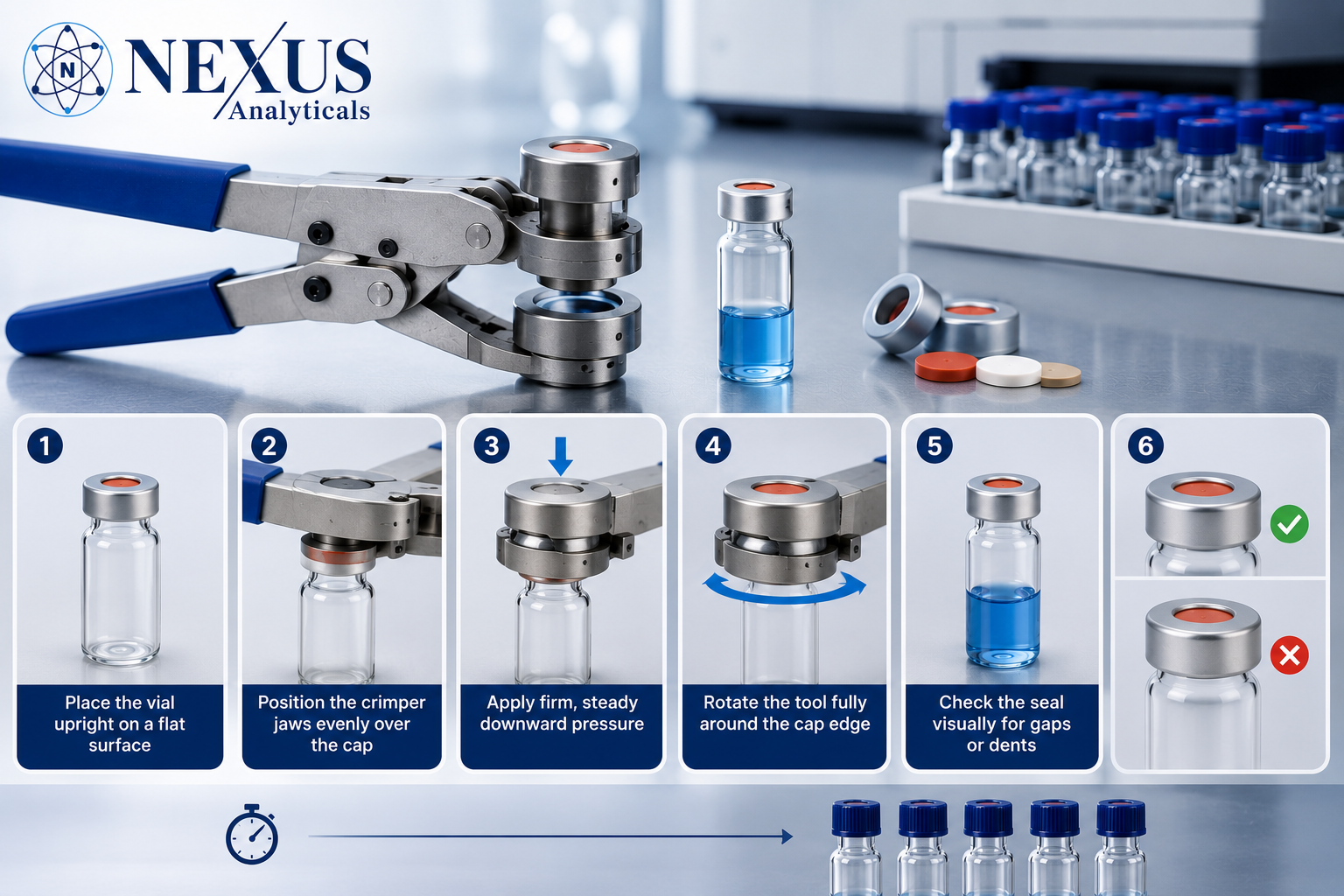 A correct vial cap sealing technique prevents most sample loss issues. Follow these steps for a solid seal every time.
- Place the vial upright on a flat surface
- Position the crimper jaws evenly over the cap
- Apply firm, steady downward pressure
- Rotate the tool fully around the cap edge
- Check the seal visually for gaps or dents
This process takes only seconds once you get the hang of it. Rushing the last step is the most common error analysts make.
Common Mistakes to Avoid
- Using the wrong crimper size for the cap
- Applying uneven pressure during sealing
- Skipping seal inspection after crimping
- Reusing damaged or bent crimper jaws
- Ignoring vial glass cracks before sealing
Avoiding these mistakes saves labs real money over time. Damaged samples mean repeated testing and wasted reagents.
Expert Insights
Working with dozens of QA labs over the years shows a pattern. Teams that invest in quality chromatography vial closure tools report fewer rerun tests. They also see better instrument uptime. A crimper feels like a minor purchase. In practice, it protects your entire testing workflow.
Good tools also reduce operator fatigue during long shifts. Ergonomic grips matter more than most buyers expect at first.
Protect Every Sample with Secure Crimp Seals!
Don’t let a cheap crimper cost you accurate results. Explore trusted NexPro crimping accessories built for GC and HPLC precision work. Visit our website to find Crimper & D-Crimper sized right for your vials. Upgrade today and stop worrying about leaks tomorrow.
FAQs
- What is the difference between a crimper and a decapper?
Ans:- A crimper seals aluminum caps tightly onto GC and HPLC vials before testing. A decapper does the opposite, removing sealed caps safely for reuse, cleaning, or vial disposal afterward.
- Can I use the same crimper for all vial sizes?
Ans:- No, you can’t. Different vial sizes need matching crimper diameters, such as 11mm, 13mm, or 22mm, for a proper, leak-proof, even seal every single time you crimp.
- How do I know if my vial seal has failed?
Ans:- Look for visible gaps around the cap, a loose or wobbly seal, sample evaporation, or unexpected changes in your GC and HPLC results during long-term storage.
- Are D-crimpers better than standard crimpers?
Ans:- Yes, generally. D-crimpers apply even pressure across the cap edge, reducing damage to glass vials and caps while creating a tighter, more reliable, leak-proof seal every time.
- How often should I replace my crimping tool?
Ans:- Replace your crimping tool jaws when you notice wear, rust, or inconsistent sealing results. Most labs inspect crimpers every few months to maintain consistent, leak-proof vial seals.