

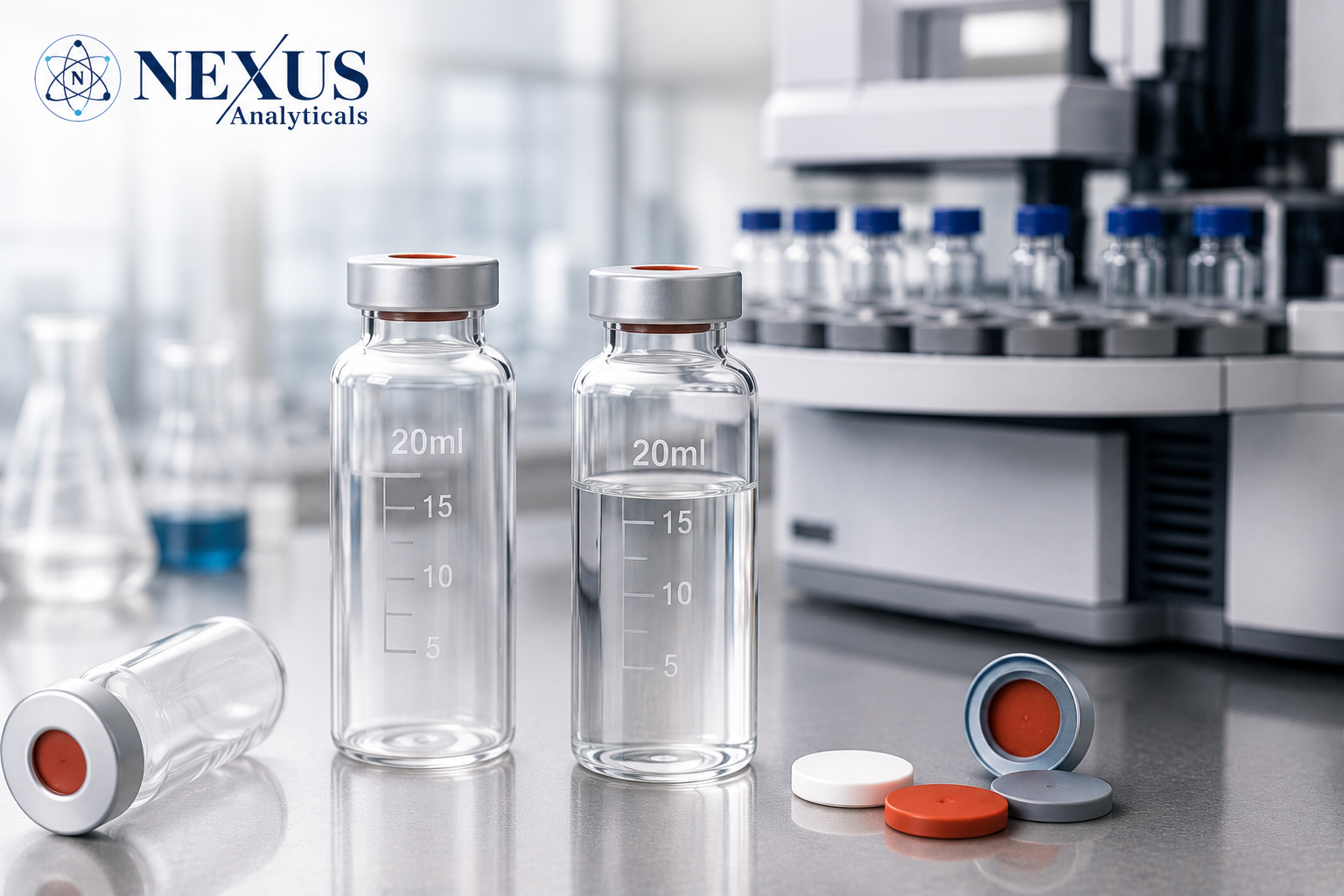
GC-HS 20ml Vials and Septa keep volatile compounds secure, sealed, and ready for accurate headspace analysis on any GC system. Pick the wrong cap or septa, though, and your results (and your equipment) pay the price. Here’s how to choose right, every time.
Did you know? Analysts at accredited GC labs list septa failure as a leading cause of sample loss during automated testing, according to industry quality guidelines from ASTM International.
That’s why GC-HS 20ml Vials and Septa matter so much. At Nexus Analyticals, we’ve watched labs lose hours of prep work over a five-cent septa. Getting your vial and septa combo right from Nexa Analyticals protects your samples, your instrument, and your data. This blog breaks down specs, sealing styles, and material choices so you never guess again.
Key Takeaways
- GC-HS 20ml Vials and Septa work together; mismatched pairs cause leaks and skewed results.
- Crimp caps suit high-throughput labs; screw caps suit faster, repeated sampling needs.
- Septa material should match your solvent and heating temperature for best sealing.
- Confirm neck finish and tray fit before buying vials for Perkin, Shimadzu, or Agilent systems.
- Fresh septa and clean prep habits prevent most common headspace sample errors.
Why 20ml Headspace Vials Support Better GC Results
Headspace vials aren’t just glass containers. They’re precision tools built to hold volatile compounds without leaking during heating cycles. A poorly matched vial can warp, crack, or vent gas early. That skews your peak areas and throws off calibration.
20ml Headspace Vial Specifications You Should Know
Most 20ml headspace vial specifications call for clear or amber borosilicate glass, a flat or rounded bottom, and a neck finish rated for either crimp or screw closures. Wall thickness matters too. Thicker walls resist pressure buildup during heated incubation, which keeps results consistent run after run.
How Septa Protect Volatile Sample Storage for GC
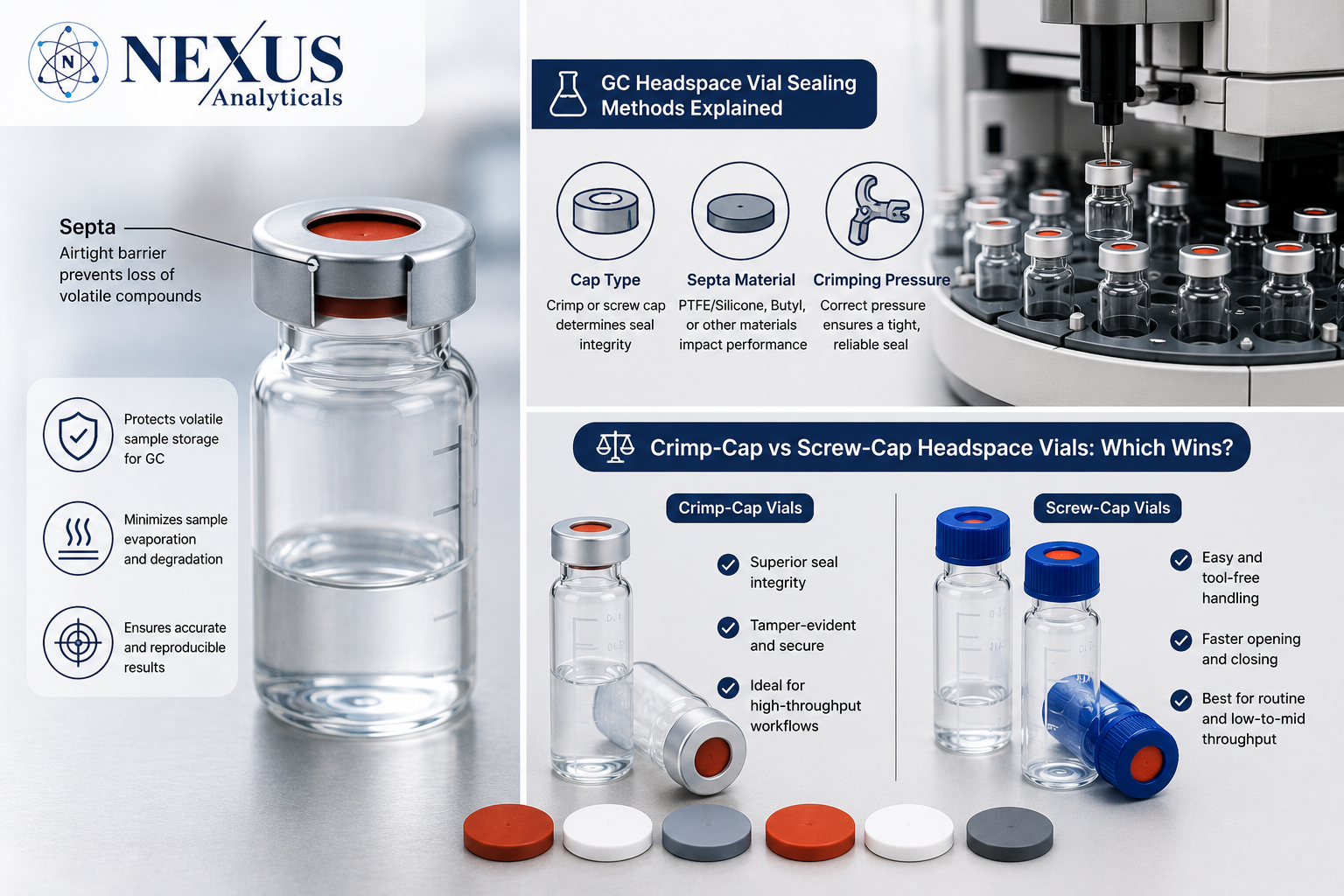 Septa sit between the vial and the cap, forming an airtight barrier. Without a tight seal, volatile sample storage for GC becomes unreliable fast. Even tiny gaps let compounds escape before the needle ever pierces the surface.
GC Headspace Vial Sealing Methods Explained
GC headspace vial sealing depends on three factors: cap type, septa material, and crimping pressure. Get any one wrong, and you risk sample loss or cross-contamination between runs.
Crimp-Cap vs Screw-Cap Headspace Vials: Which Wins?
The crimp-cap vs screw-cap headspace vials debate comes down to workflow. Crimp caps offer a tamper-evident seal that’s tough to beat for high-throughput labs. Screw caps trade a bit of seal strength for faster, tool-free handling.
| Feature | Crimp-Cap Vials | Screw-Cap Vials |
|---|---|---|
| Seal Strength | Very high | Moderate to high |
| Ease of Use | Requires a crimping tool | Hand-tightened for faster operation |
| Reusability | Typically single use | Often reusable |
| Best Applications | High-pressure heating and long-term sample storage | Quick and repeated sample preparation |
| Tamper Evidence | Excellent | Limited |
Matching Septa Material to Your Application
Not every septa works with every sample. Chemistry matters here.
GC-HS Vial Septa Compatibility with Common Materials
GC-HS vial septa compatibility usually falls into three camps:
- PTFE/silicone septa: durable, low bleed, ideal for most routine volatile testing
- Butyl rubber septa: strong resealing after multiple needle punctures
- Silicone-only septa: gentler on sensitive samples, though less puncture-resistant over time
Choosing the wrong material can contaminate your sample or degrade under repeated heating. Always match the septa to your solvent’s polarity and your run temperature.
Choosing the Best GCHS Vials for Your Instrument
Instrument compatibility is where many labs slip up.
20ml GC-HS Vials for Perkin, Shimadzu, and Agilent Systems
Not all vials fit all autosamplers. 20ML GCHS Vials for Perkin, Shimadzu, and Agilent instruments each expect specific neck diameters and cap heights. A vial that’s off by even a millimeter can jam your autosampler tray.
- Confirm neck finish before ordering in bulk
- Check tray slot depth against vial height
- Test one batch before committing to a full order
Buyers searching for the best 20ML vials and Septa should also check that suppliers publish exact dimensional tolerances, not just “universal fit” claims.
Best Practices for Headspace Analysis Sample Preparation
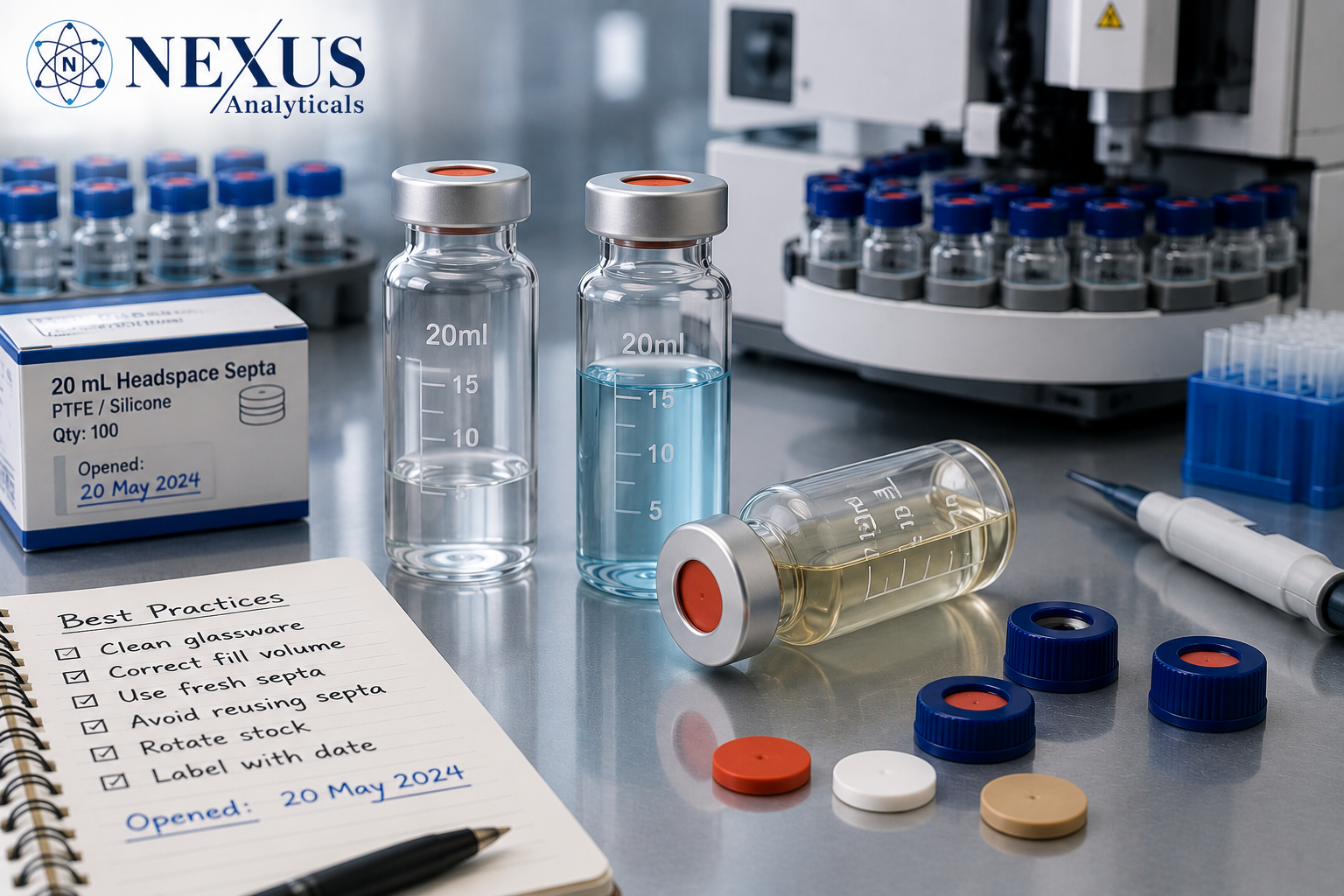 Good headspace analysis sample preparation starts before you even touch the vial. Clean glassware, correct fill volume, and fresh septa all reduce variability. Reusing worn 20ml Vial Septa is one of the most common mistakes we see in client labs. A septa punctured more than a few times loses its seal integrity, even if it looks fine.
Pro tip: Rotate septa stock and label opened boxes with a date. It’s a small habit that saves big headaches during audits.
Labs chasing the Best GCHS Vials for their setup should weigh cost against consistency. A slightly pricier vial that seals reliably beats a cheap one that fails mid-batch.
Make Every GC Analysis More Reliable!
Stop letting a bad seal cost you time, samples, and credibility. Switching to reliable NexPro GC-HS consumables gives your lab the consistency it deserves. Explore trusted GC vial and septa options built for accuracy and built to last. Nexus Analyticals stocks vials and septa engineered for real lab conditions, not just spec sheets.
FAQs
Q1. What is a GC-HS 20ml vial used for?
Ans:- It stores and heats volatile samples for gas chromatography headspace testing, letting analysts measure compounds in the vapor phase above the liquid or solid sample.
Q2. What’s the difference between crimp-cap and screw-cap headspace vials?
Ans:- Crimp caps need a crimping tool and offer stronger, tamper-evident seals. Screw caps tighten by hand and work faster for labs running frequent, lower-pressure tests.
Q3. Which septa material is best for headspace vials?
Ans:- PTFE/silicone septa suit most routine work due to low bleed and strong chemical resistance. Butyl septa handle repeated needle punctures better for high-volume automated runs.
Q4. Are 20ml headspace vials compatible with Agilent and Shimadzu GC systems?
Ans:- Yes, as long as the neck finish and cap height match each instrument’s autosampler tray specs. Always confirm dimensions before bulk ordering.
Q5. How do I know when to replace vial septa?
Ans:- Replace septa after a few punctures, when a coring residue is visible, or when a vial fails to hold vacuum during a leak check.